

Manual, Pneumatic & Automated Can Ringing Machines
The right applicator should make packaging easier, more consistent and easier to scale. This guide compares hand application, manual presses, pneumatic machines and higher-volume automated equipment.


Quick machine-selection chart
| Workflow | Utilities | Good starting point | Compatible formats |
|---|---|---|---|
| Hand-applied carriers | None | Small batches, mixed packs and flexible retail packing | Selected 4, 6, 8 and 12 pack soft-plastic formats; 4, 6 and 8 reusable hard rings |
| Manual cardboard hand press | No electricity or compressed air | Small- to medium-volume cardboard-ring packaging | 4, 6 or 8 with matching press-head configuration |
| Manual 6- or 8-pack ringing machine | Manual operation | Regular packaging runs using compatible plastic or cardboard configurations | 6 or 8, depending on machine and installed parts |
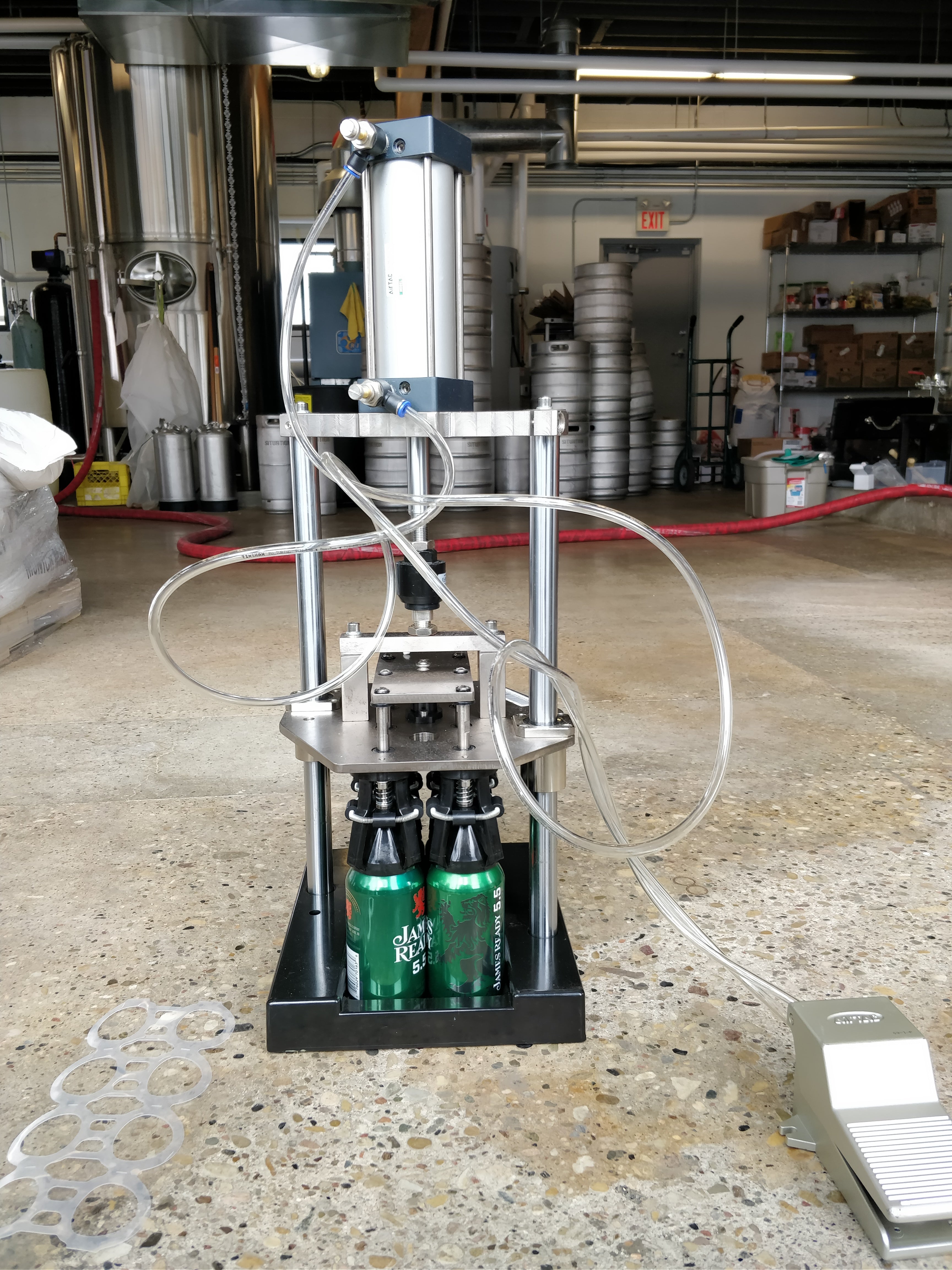
| Pneumatic 6- or 8-pack machine | Compressed air | Foot-pedal operation with both hands free to position and remove cans | 6 or 8, depending on machine and installed press head |
| Automated cardboard-ring system | Production-line setup | Higher-volume producers seeking repeatable throughput | 4, 6 and 8 with the correct configuration |
Shop current applicators and parts
- Hand Press for Cardboard Rings
- Manual 6-Pack Can Ringing Machine
- Manual 8-Pack Can Ringing Machine
- Pneumatic 6-Pack Ringing Machine
- Pneumatic 8-Pack Ringing Machine
- Cardboard Press-Head Conversion Kit
- Browse all Ringing Machines & Parts
Automated cardboard-ring throughput
For businesses planning a higher-volume line, our automated cardboard-ring system is designed for approximately:
- 15 four-packs per minute
- 14 six-packs per minute
- 13 eight-packs per minute
Actual output depends on line setup, can flow, carrier configuration, changeovers, operator procedures and maintenance. Automated systems are quoted by consultation because the correct configuration needs to match the cans and production workflow.
A simple return-on-investment worksheet
You do not need a complicated forecast. Start with your own packaging-day numbers:
- Record the number of finished multipacks packaged each week.
- Time your current process and calculate current packs per minute.
- Estimate the target speed using a tested machine and your actual cans.
- Calculate weekly labour hours saved.
- Multiply hours saved by your fully loaded hourly labour cost.
- Add any avoided overtime, downtime or outsourcing costs that you can document.
- Divide the total equipment investment by verified monthly savings.
Monthly labour savings = monthly hours saved × fully loaded hourly labour cost
Estimated payback period = total equipment investment ÷ verified monthly savings
Use conservative, tested speeds and include maintenance, installation and financing costs where applicable.
Match the machine, press head and carrier
A 6-pack machine and an 8-pack machine use different configurations. Cardboard carriers also require the correct press head. Review the compatibility guide, then watch the setup and application videos before production.
Planning a new packaging line?
Tell us your can format, weekly pack volume, preferred 4-, 6- or 8-pack output and current workflow. We can help you compare hand, pneumatic and automated options.
Helpful next steps: Browse ringing machines · View the manual 6-pack machine · Request a packaging quote · Watch product tutorials
Compare products for your order
- 4 Pack Cardboard Can Rings – 1000 per Box
- 6 Pack Cardboard Can Rings – 500, 1000 or 2000/Box
- 8 Pack Cardboard Can Rings – 500, 1000 or 1500/Box
- Hand Press Ringing Machine for Cardboard Rings
Before you order
Choose the pack count first, then match the cardboard carrier to your can and press head. The carrier and applicator are separate products. For an existing machine, confirm the installed head before ordering replacement rings.
Browse all buying guides · Ask about fit, quantities or a quote